An undeterred Chief Executive Officer of NSO Group, Shalev Hulio, in an interview to Israeli Channel 12 on Saturday, strongly defended the company's operations, though he also conceded that some 'mistakes' may have happened over the years.
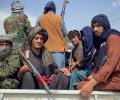
In fact, the Taliban apparently collects about 10 per cent as cultivation tax from opium farmers and 15 per cent as heroin tax from laboratories and smugglers that smuggle narcotics into Pakistan. This, by itself, is a revenue stream estimated at USD 250-300 million.
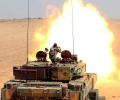
For some inexplicable reason, the army prefers to use Russian armour; Arjun is deployed in only two of its 63 armoured regiments.
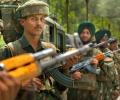
The Uttar Pradesh Defence corridor is estimated to attract Rs 20,000 crore investment and create 250,000 jobs.

The 33 per cent drop in arms imports between 2015 and 2016 affected Russia the most, but India's imports of US arms also fell, by 46 per cent, the report points out.

'It was deliberate,' the Russians allege.
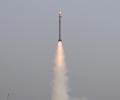
The MRSAM is amongst the most lethal surface-to-air missiles in service anywhere.

Even while rejecting Israel Military Industries' petition, the court has effectively granted foreign vendors the constitutional right to be treated equally with Indian companies.

HAL is poised to sell the Philippines at least seven Dhruv Advanced Light Helicopters and eight Dornier 228 aircraft for Rs 30 billion, reports Ajai Shukla.

What must India do now?

Access to India's defence market must be made conditional -- available only to those who are ready to make a long-term commitment in India, argues Ajai Shukla.

'Our sensors allow the missile to locate and identify the target even if it's on the move.'

'Pakistan has no strategic depth and is vulnerable to Indian military power without even crossing the border,' says Colonel Anil A Athale (retd).

The onus today is on China, but it also requires a little diplomatic finesse from India, backed by a modernised armed force, argues BJP MP Subramanian Swamy in this excerpt from his new book, Himalayan Challenge: India, China And The Quest For Peace.

India should do what we can to ensure that our two friends do not get into a confrontation that is meaningless and ultimately damaging to everyone including us.

A round-up of our favourite photographs from the week gone by.

In a powerful signal to New Delhi that the United States is a reliable defense partner, Senators Mark Warner and John Cornyn introduced US-India Defense Technology and Partnership Act in Senate

'In India foreign policy is generally handled by the prime minister.' 'One can clearly see the Vajpayee stamp on all this.' 'Only a person with poetic imagination can weave such a complex web,' says Colonel Anil A Athale (retd).

India has become the 37th country to join the list of Strategic Trade Authorization-1 category, the only South Asian nation.

We bring forth to our readers the list of nations sitting on a nuclear stockpile, based on the study findings:
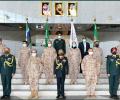
'The attacks made clear to all the Gulf States that Pakistan was the nursery and sanctuary of extremist violence and that this violence threatened all the countries in the region.'
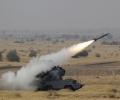
DRDO to develop an army version of the medium range surface-to-air missile.
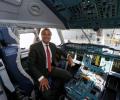
The success of Anil Ambani's ambitious defence plan will depend partly on whether he can persuade government officials and international partners that he can build sophisticated equipment and partly on whether the PM can get India's notoriously slow procurement process to work, say Paritosh Bansal, Sanjeev Miglani and Promit Mukherjee.

From being on the verge of war and violence, West Asia has actually got a sudden reprieve. Seema Mustafa explains
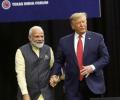
'What has India got out of Howdy India in substantive terms?' asks Ambassador M K Bhadrakumar.

President Obama had no intention of risking a global conflagration on account of the use of chemical weapons in Syria, especially at a time when he was struggling to wind up the wars his predecessor had started, says T P Sreenivasan

Aseem Chhabra is impressed by Rima Das's Bulbul Can Sing, Ritesh Batra's Photograph and eight other outstanding films.
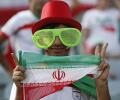

The Geneva agreement is a signal, which at least Saudi Arabia and Israel are so reading, that normalisation of relations between US and Iran is not merely about the nuclear fuel cycle, says K C Singh.

'I am no longer surprised by how cynical university students generally are about American motives. America, no matter who the President, what the circumstances will act like a bully, is their collective belief,' says Ambassador B S Prakash after a recent interaction with students.
After 20 months of hectic negotiations, Iran and six major powers have reached a historic deal to limit Teheran's nuclear programme in return for lifting of sanctions. Let's understand closely what the deal is all about.
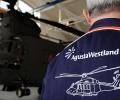
We get tangled up in our own crooked web on purchases, and the murky arms bazaar knows it, says Shekhar Gupta.

The Middle East's power house is about to get a new ruler who is only 31 and he may lead Saudi Arabia for decades, says Ambassador M K Bhadrakumar.

'IAF is expanding at a rapid pace'

'The surge of Saudi nationalism is the last thing Washington wants,' says Ambassador M K Bhadrakumar.

The year 2014 is coming to an end. It was the year of conflict, the year of strife. Year 2014 will be remembered for several reasons -- the rise and threat of the Islamic State, the downing of two Malayasia Airlines aircraft and the sudden and effective way of using hastags on social media to generate a buzz about the event. After all, who can forget #theicebucket challenge and the phenomenon it grew into. Read on as we bring you an overview of international news and events of 2014.

The following is the full text of US President Donald Trump's first address to a joint session of the Congress on February 28, as prepared for delivery and released by the White House press office.
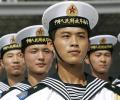
Right from conducting nuclear deterrence patrols in 2015 to its destructive space programme, from its back-tracking on economic commitments to its hardened positions on Sino-India border deal -- its approach with India spells Adversarial with a capital A, says Shehzad Poonawalla

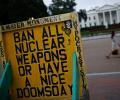
Let's take a look at the doomsday scenarios:

In his penultimate State of the Union address, Barack Obama said that the economy is improving.
